Only You Are Here
- 4.5
- Rating
- 5.00M
- Installs
- Free
- Price

 Analysis by App-foxy
Only You Are Here caught my attention because it presents itself as an adventure built around a solitary mystery rather than a loud, crowded challenge. After spending time with it, my strongest impression is that it wants me to slow down, observe, and let the setting do part of the storytelling. That approach will not suit everyone, but when I am in the right mood, it creates a surprisingly focused experience.
This is a free adventure game from Kids Games LLC, aimed at Teen players and available on devices running Android 6.0 or later. The current version is 3.3.43, and its large audience gives it a 4.6 average from over sixty-seven thousand ratings. Those figures suggest that the unusual, mood-first direction has connected with many players, although popularity alone does not make it a universal recommendation.
I would describe the game as a compact mystery experience for someone who enjoys atmosphere as much as action. Its store summary, “One mysterious story,” is brief, but it points toward the central appeal: the feeling that the player is entering a situation where the surroundings matter and where the title’s idea of being alone is more than a simple description.
You May Also Like

 Blood Strike: 2.5 Anniversary
Blood Strike’s Loadouts Turn Every Drop Into a Tactical Gamble
A close look at Blood Strike’s custom loadouts: how fast access to signature weapons reshapes its battle royale rhythm, rewards preparation, and narrows the gap between fights.

 Pandora - Music & Podcasts
Pandora’s Music Is Easy to Start, but Harder to Recover
Pandora’s strength is its low-effort path from a seed to a station. Its weak spot is how much confidence it asks you to place in connection, setup, and quiet recovery.

 8 Ball Pool
 Is Built on Rivalries, Rematches, and Routine
A close look at the rivalries, rematches, shared routines, and unanswered safety questions that turn a quick pool match into a persistent mobile community.

 Samsung Music
’s Quiet Strength Is Playing What You Already Own
Its reach comes less from spectacle than from dependable access to a personal library. That simplicity is both the app’s strongest retention engine and its ceiling.

 AccuWeather: Weather Radar
AccuWeather Review: A Quick, Clear Forecast for Everyday Decisions
For everyday plans, the best forecast is the one you can understand quickly. AccuWeather makes rain timing, radar, and local conditions easy to act on, with a few trade-offs.

 Hill Climb Racing
Why Hill Climb Racing Still Turns Crashes Into One More Run
A tiny car, a bumpy hill and one more upgrade: Hill Climb Racing keeps resurfacing because its simple chaos makes every near-miss feel personal.
More From Our News Desk



How the first impression sets the mood
The opening impression is deliberately restrained. Instead of immediately trying to overwhelm me with constant objectives, the game encourages attention to place and tone. That gives the first moments a slightly uneasy quality. I am not simply moving from one task to another; I am trying to understand what kind of world I have entered and why it feels so empty.
That restraint is important because a mystery loses some of its power when every answer is delivered at once. Here, the sense of uncertainty becomes part of the playable experience. I found myself looking more carefully at the environment and considering whether a detail was decorative, suggestive, or connected to the larger story. Even when the interaction itself is simple, the act of noticing gives it weight.
The game’s free entry point also makes this first impression easy to test. I can try the experience without paying upfront, then decide whether its slower pace and isolated tone work for me. Optional purchases range from forty-nine cents to nine dollars and ninety-nine cents per item, so I would approach those carefully rather than assuming that spending is necessary to appreciate the basic idea.
One practical tip is to begin when I have enough uninterrupted time to settle into the atmosphere. This is not the kind of game I would choose while waiting for a download or trying to fill a few seconds between errands. Its impact depends on giving the setting room to become familiar, and frequent interruptions make the quiet feel more like emptiness than tension.
A realistic use case would be an evening session after a busy day, with headphones available and notifications turned off. I would not recommend it as background entertainment while watching another screen. The game asks for a small amount of attention, particularly when the environment is communicating more through mood and placement than through obvious explanations.
A visual language built around absence
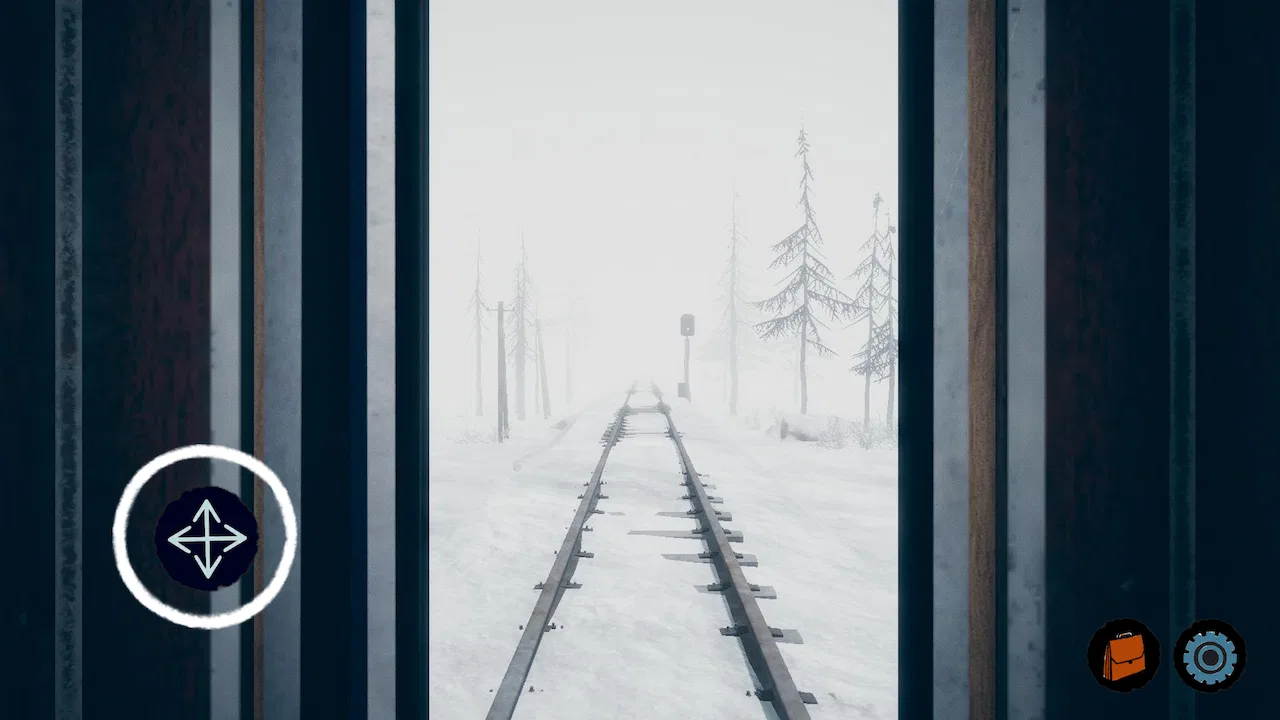
The art direction works best when it treats the environment as a character. Spaces feel meaningful because they are not overloaded with visual noise. The emptiness creates questions: what happened here, what should be present, and why does the player occupy this particular position? That visual language supports the mystery without needing to explain every feeling in dialogue.
I appreciate that the setting does not need to shout in order to be memorable. A quiet location can make a small change feel important. A doorway, a distant shape, an unusual arrangement, or a shift in lighting can draw my attention precisely because the surrounding scene is controlled. This is one of the game’s more effective design choices: the environment gives ordinary details a chance to become clues in my mind.
There is a trade-off, though. Players who prefer bright worlds packed with collectibles, characters, and obvious visual rewards may find the presentation too sparse. The same restraint that helps the mystery can also make progress feel less immediate. I sometimes had to accept that the game wanted me to absorb a place before it rewarded me with a clear development.
That makes the experience different from a typical action adventure. In a more conventional game, the environment often exists to guide me toward combat, upgrades, or a major set piece. Here, the setting is closer to a mood-setting instrument. Movement and observation matter because they preserve the feeling of uncertainty, not because they lead quickly to a stronger ability or a bigger battle.
For players who enjoy visual storytelling, I suggest resisting the urge to rush through familiar-looking areas. Returning attention to a space can reveal how carefully the game uses contrast and composition. I would also avoid assuming that the most dramatic object is automatically the most important one. The quiet relationship between objects can be more useful than a single obvious focal point.
Sound gives the solitude its shape
The sound design is closely tied to the setting. Rather than treating audio as decoration, the game uses quiet and small changes in sound to reinforce the player’s isolation. That makes headphones worthwhile, not because the game needs to be played loudly, but because subtle audio cues can disappear when mixed with household noise or other media.
What I like about the audio approach is its patience. Silence leaves space for me to imagine what might be outside the visible area. A sound that arrives after a long quiet stretch can feel more significant than a constant musical track would. The result is a rhythm based on anticipation: explore, listen, pause, and decide whether to continue or examine the surroundings more closely.
This rhythm also helps the game avoid becoming mechanically frantic. The soundscape tells me that I should pay attention to atmosphere rather than expect a new reward every few seconds. That is a coherent choice, and it supports the art direction instead of fighting it.
However, the same pacing can feel slow if I am looking for a conventional adventure loop. Players who expect frequent dialogue, rapid objectives, or continuous music may interpret the quiet as a lack of content. I see it differently, but only because I enjoy games that use sound to make me feel slightly uncertain. If I want something energetic after work, this would not be my first choice.
A useful habit is to play with the volume set comfortably rather than turning it down too far. The game’s mood depends on contrast, and low-volume audio can flatten that contrast. At the same time, I would not recommend increasing the volume simply to make the experience more intense; the atmosphere works better when it remains controlled.
Where the mechanics support the mystery
The mechanics fit the game’s identity when they encourage me to observe instead of distracting me with unnecessary systems. Exploration feels more valuable when I am not constantly managing equipment, chasing scores, or comparing statistics. That simplicity keeps the focus on the central question of what the place means and what role I have within it.
This is also where the game separates itself from many mainstream adventure alternatives. Larger adventure titles often build their appeal around open maps, combat progression, side activities, and a long list of upgrades. Only You Are Here takes a narrower route. Its strength is concentration: the world can maintain a specific emotional tone because it is not trying to become every kind of game at once.
The downside is that players who need deep customization or a strong progression ladder may feel under-served. I would skip it if my main reason for playing an adventure game is to collect gear, improve a character build, or master a complex combat system. This is better suited to someone who sees discovery and interpretation as the reward.
One of the more useful ways to approach the mechanics is to treat exploration as a form of note-taking. I do not mean writing down every detail, but I do pay attention to recurring visual ideas, changes in the environment, and moments when the game deliberately slows me down. That mindset makes the experience more engaging than simply following the most obvious path.
Another practical trade-off concerns patience. If I become convinced that every location must deliver an immediate clue, I can turn the game into a frustrating search. It works better when I allow some scenes to establish tone first. The mystery benefits from uncertainty, but that also means progress may not always feel neatly signposted.
The game’s Teen content rating is worth considering before sharing it with younger players. I would not hand it to a child simply because it is free or because the controls appear approachable. Its emotional tone and mysterious presentation are aimed at an older audience, and parents should make that decision with the rating in mind.
Who will enjoy the slower rhythm
I think the best audience is someone who likes atmospheric adventures, environmental storytelling, and stories that leave room for personal interpretation. If I enjoy walking through a strange place and forming theories from small details, the game offers a focused way to spend an evening. Its solitary premise is especially effective for players who prefer a personal, inward kind of adventure rather than a social or competitive one.
It can also work for players who are tired of games that constantly demand optimization. There is a certain relief in entering an experience where I do not need to build the perfect character or react to a stream of alerts. The game’s identity comes from its setting and pacing, so I can concentrate on how those elements work together.
I would be more cautious about recommending it to someone who wants a long, highly replayable campaign. A mystery built around a specific mood may have less appeal once its surprises are familiar. It is also not the right choice for someone who wants multiplayer interaction, fast combat, or a broad sandbox full of unrelated activities.
Storage and device compatibility are straightforward considerations: the game supports Android 6.0 and newer, which covers a wide range of devices. Still, I would keep expectations realistic on older phones. Even when a game runs, a mood-driven experience loses some of its effect if loading interruptions, small text, or uncomfortable audio make it difficult to settle into the world.
Since the game is free, I would use the initial play period as a personal test rather than judging it by the presence of in-app purchases. If the atmosphere works before I feel any need to buy something, that is a good sign. If I am already frustrated by the pace, spending more is unlikely to solve the underlying mismatch in taste.
How it compares with familiar adventure choices
Compared with action-heavy adventure games, this one is quieter and more deliberate. It does not seem interested in turning every discovery into a spectacle. Compared with puzzle-focused adventures, its appeal is less about solving a chain of tightly defined problems and more about understanding the emotional logic of the setting. That middle ground gives it a distinct personality.
It also differs from narrative games that rely mainly on long conversations. Here, the world itself carries much of the burden. I am encouraged to read the surroundings, listen to the gaps between sounds, and notice how the pacing shapes my expectations. Players who prefer direct exposition may find that approach less satisfying, while players who enjoy inference may find it more rewarding.
The most important comparison is not about content size but about attention. A large adventure may give me more systems and activities, yet this game can feel more focused because its art, sound, setting, and rhythm point in the same direction. That coherence is its main advantage. Its main weakness is that the same narrow focus leaves less room for players who want variety.
For me, the best way to judge it is to ask a simple question: do I want to be entertained by constant events, or do I want to be placed inside a mood and asked to explore it? If the answer is the second, this game has a clear reason to exist. If the answer is the first, a more conventional adventure will probably be a better use of my time.
My final view of the atmosphere
Only You Are Here succeeds when its parts are considered together. The visual restraint makes the setting feel exposed, the sound gives the silence shape, and the slower rhythm lets small changes matter. The mechanics are most convincing when they serve that mood instead of competing with it.
That does not make it flawless. The sparse presentation can feel uneventful, the mystery may ask for more patience than some players want to give, and the focused design does not offer the variety of a larger adventure. I would not recommend it as a universal pick, and I would especially avoid it for anyone seeking fast action or extensive progression.
For the right player, though, the limitations are part of the appeal. I see it as a free, atmospheric adventure for quiet sessions, careful observation, and a story that gains strength from what it leaves me wondering about. The developer, Kids Games LLC, has shaped the experience around a clear idea rather than filling it with unrelated systems. If you value a coherent playable mood more than constant rewards, this is worth trying before deciding whether its pace fits you.
My recommendation is to play it with headphones, give the opening enough uninterrupted attention, and resist rushing through spaces that seem empty. That approach reveals the game’s strongest quality: it turns solitude into an active part of play. For me, that makes it a memorable adventure, even when its quiet approach occasionally asks for more patience than I have.
FAQs for Only You Are Here
01What is the main objective of Only You Are Here?
Only You Are Here is an immersive exploration game that challenges players to navigate a mysterious world filled with puzzles and hidden secrets. The main objective is to uncover the story behind the enigmatic environment while solving intricate puzzles to progress and unlock new areas. Players will engage in deep exploration, encouraging curiosity and critical thinking.
02Is Only You Are Here suitable for all age groups?
While Only You Are Here offers a captivating experience for a broad audience, it is best suited for older children and adults due to its complex puzzles and mature themes. The game involves strategic thinking and problem-solving, which might be too challenging for very young players. Parental guidance is recommended for younger audiences.
03Does Only You Are Here require an internet connection to play?
Only You Are Here is designed to be played offline, allowing users to enjoy the game without needing an internet connection. This feature makes it convenient for playing on the go, whether on a commute or during travel. However, an internet connection might be needed for downloading updates or accessing additional content.
04Can I play Only You Are Here on both Android and iOS devices?
Yes, Only You Are Here is available for download on both Android and iOS platforms. The game has been optimized to ensure smooth performance across various devices. Users can find the download links on their respective app stores, ensuring compatibility with most smartphones and tablets.
05Are there in-app purchases available in Only You Are Here?
Only You Are Here offers a range of in-app purchases that enhance the gaming experience. These include additional hints, special items, and exclusive content that can help players progress more easily through difficult sections. While the game is fully playable without purchases, they provide optional ways to enrich the experience.
Pros
- Intuitive user interface design.
- Offers personalized recommendations.
- Lightweight and fast performance.
- Seamless syncing across devices.
- Customizable notification settings.
Cons
- Limited offline functionality.
- Occasional minor bugs.
- Requires constant updates.
- Ads can be intrusive.
- Lacks advanced features.

Only You Are Here
Gallery